
Homepage > WORLD > China OEM clothing manufacturer rankings
China OEM clothing manufacturer rankings
Time: 2026/11/10 17:55
Author:news
A new fashion brand has found a manufacturer that offers an attractive quote. The sample looks promising, so the buyer places an order—only to discover later that the fabric needs to be sourced again, the delivery date was never confirmed, and the factory’s minimum order applies to each color separately.
This is a hypothetical scenario, but it illustrates the core challenge of choosing an OEM clothing manufacturer: the lowest quote does not tell you whether a factory can make your product, meet your deadline, or support your next order.
For brands, importers, and cross-border sellers, a useful manufacturer shortlist should begin with fit—not an unverified ranking.
China OEM Clothing Manufacturer Shortlist
There is no single ranking that reliably identifies the best manufacturer for every buyer. Product category, order size, fabric requirements, certifications, and delivery destination all affect the choice.
The following companies are starting points for research, not a ranking based on audited scores. Manufacturing locations, minimum orders, and current services should be confirmed directly.

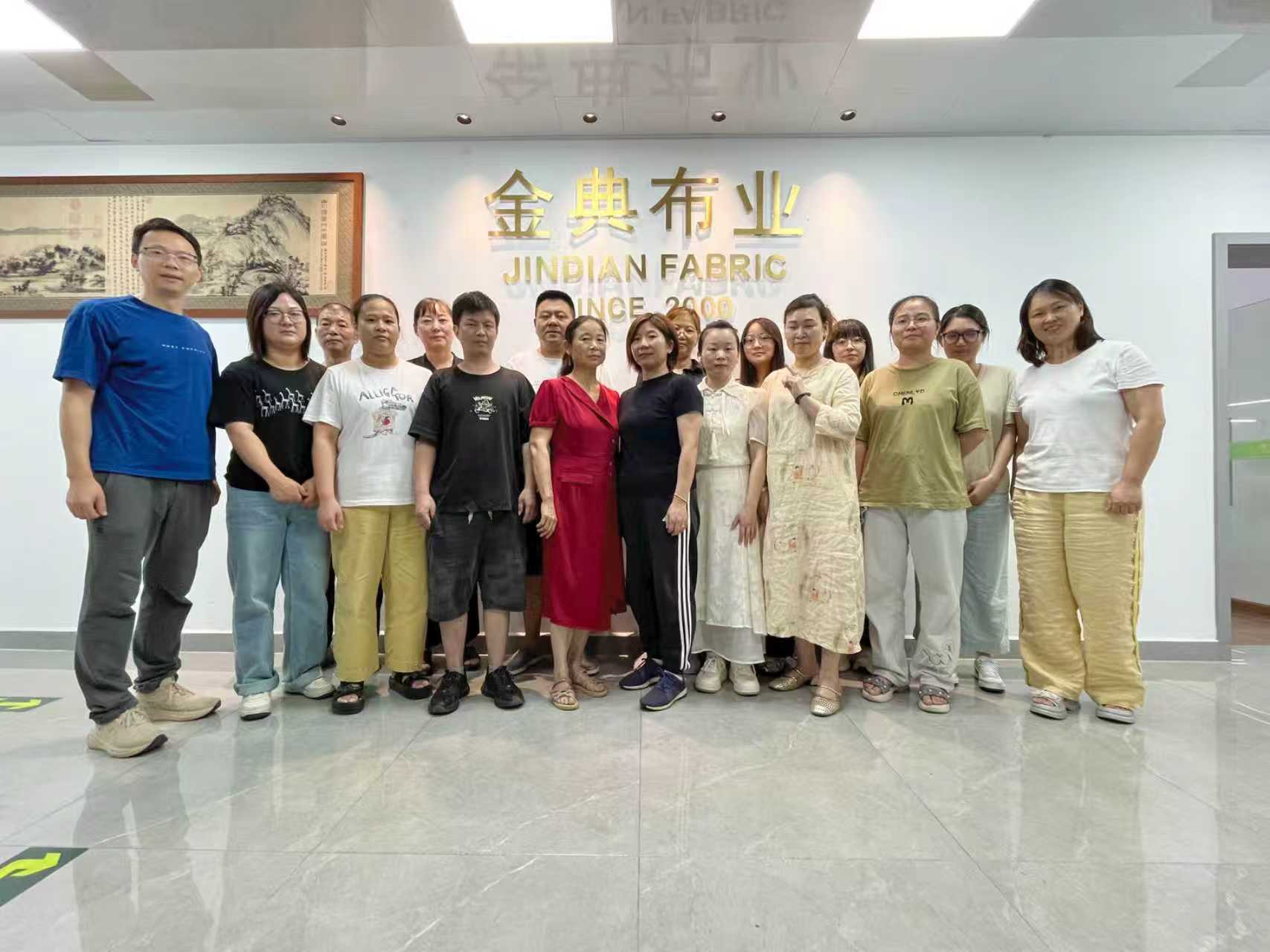
Hangzhou Jindian Textile Co., Ltd. — Also known as Jindian Textile, the company offers fabric development and women’s clothing OEM and ODM services. Its products include dresses, tops, trousers, skirts, outerwear, and other women’s apparel. It is worth considering for buyers seeking sampling, fabric support, and discussions about small-batch production.
Shenzhou International Group Holdings Limited — A large apparel manufacturer to investigate when researching established production partners. Ask whether its product capabilities and order requirements match your project.
Crystal International Group Limited — An apparel manufacturing group that may be relevant to buyers assessing larger-scale supply options. Confirm the production location and commercial terms for your category.
Esquel Group — A textile and apparel group that buyers can review when sourcing garments with significant fabric requirements. Check whether its current services and order sizes suit your needs.
TAL Apparel — An apparel manufacturer to consider during research, particularly if your sourcing team is evaluating established garment suppliers. Verify product fit, available capacity, and order requirements directly.
A shortlist saves time, but the decision should come after reviewing documents, samples, pricing, and a proposed production schedule.
Five-Point Factory Evaluation Checklist
1. Certifications: Are the documents relevant and current?
Ask the factory for the documents required by your market, retailer, or brand policy. Depending on the product, these may include social compliance audit reports, textile safety certifications, or recycled-material certifications.
Evaluation standard:
Check the certificate holder, scope, validity period, and issuing body.
Confirm that the certificate covers the relevant facility, material, or product.
Ask whether additional transaction documents are needed for a specific order.
A certificate alone does not prove that every product or subcontractor is covered.
2. Capacity: Can the factory handle your actual order?
A factory’s total capacity is useful context, but it does not guarantee space in its production calendar.
Evaluation standard:
Share your quantities by style, color, and size.
Ask about available capacity during your intended production window.
Confirm whether work is done in-house or assigned to another facility.
Discuss what happens if materials arrive late or the sample requires revisions.
3. Product Category: Has the factory made similar garments?
A manufacturer experienced in T-shirts may not be the best fit for a tailored coat or a dress with complex fabric requirements.
Evaluation standard:
Request examples of comparable products and workmanship.
Review seams, finishing, fabric handling, and construction details.
Ask whether the factory can follow your size chart and technical requirements.
Confirm which processes or materials must be sourced externally.
4. Lead Time: Is the schedule specific enough to manage?
“Fast delivery” is not a production plan. A useful schedule identifies what must happen before the next stage begins.
Evaluation standard:
Separate sampling, material sourcing, production, inspection, and shipping preparation.
Agree on when the production clock starts.
Allow for sample revisions and buyer approval.
Put the delivery date and responsibilities in the order documents.
5. Communication: Can both sides resolve details clearly?
Small misunderstandings about measurements, labels, or packaging can become expensive after production begins.
Evaluation standard:
Check whether the supplier answers technical questions clearly.
Identify the person responsible for your order.
Use written approvals for samples, materials, measurements, and changes.
Agree on how progress updates and quality issues will be reported.
Common Mistakes—and How to Avoid Them
Mistake 1: Comparing only the unit price.
Ask what the quote includes: fabric, trims, sampling, labels, packaging, inspection, and shipping may be priced separately.
Mistake 2: Assuming the minimum order is straightforward.
A factory may calculate its minimum by style, color, fabric, or total order. Ask for the rule in writing before planning your assortment.
Mistake 3: Approving appearance but ignoring measurements.
A garment can look right in a photograph while fitting poorly. Review the sample against the agreed size chart and construction requirements.
Mistake 4: Changing details after approval without updating the documents.
Record every change and confirm its effect on price and timing before production continues.
Mistake 5: Treating delivery as the end of quality control.
Agree in advance on inspection criteria, how to report defects, and how quality concerns will be handled.
From Sample to Production: Jindian Textile’s Service Process
Hangzhou Jindian Textile works with fashion brands and trading companies on fabric and women’s garment manufacturing. The company provides services from development through production and delivery.
For a new buyer, the process can be approached in these stages:
Share the brief. Provide a design sketch, sample garment, or technical requirements, along with target quantities, sizes, and intended delivery date.
Discuss materials and pricing. Jindian can assist with fabric development and material sourcing, or discuss processing materials supplied by the buyer. Pricing depends on the style and workmanship.
Develop the pattern and sample. Review the sample’s fit, construction, fabric, and finishing. Confirm whether revisions are needed and discuss any sampling charges.
Approve production details. Agree on the final sample, measurement chart, materials, labels, packaging, quantity, quality requirements, and schedule.
Arrange production. The service can include cutting, sewing, pressing, packing, and quality inspection.
Inspect and deliver. Confirm the inspection and delivery arrangements, and retain the approved documents for any later quality questions or repeat orders.
The exact schedule, costs, and responsibilities should be confirmed for each order.
How to Plan Small-Batch Orders and Reorders
Small-batch production can help a brand test demand without committing its entire budget to one design. It still requires careful planning.
Limit variations for the first order. Fewer fabrics and colors can make sourcing and quality checks easier.
Ask about minimums early. Confirm garment and fabric requirements separately; a small garment order does not automatically mean every fabric is available in a small quantity.
Keep an approved reference set. Save the final sample, size chart, fabric details, color references, and packaging instructions.
Discuss reorder conditions before launch. Ask whether the same materials are likely to be available and how production capacity will be arranged.
Build time into your sales plan. Reorders depend on material availability, order size, and the factory’s schedule, so agree on a realistic timeline rather than assuming immediate delivery.
Jindian Textile states that it supports small orders, multiple styles, and repeat orders. Buyers should confirm the applicable minimums and lead times for their own designs.
FAQ
What is the difference between OEM and ODM?
With OEM, the buyer generally provides the design or specifications and the manufacturer produces the garment. With ODM, the manufacturer may contribute more to product development or design. The division of responsibilities should be agreed before work begins.
Do I need a complete tech pack before contacting a factory?
A complete tech pack is helpful, but buyers can begin with a design sketch, sample garment, or clear brief. Expect the factory to ask for further details before providing an accurate quotation.
Can I supply my own fabric?
Some manufacturers accept customer-supplied materials. Jindian Textile offers a customer-supplied material processing option; confirm delivery, inspection, loss allowances, and responsibility for material defects before ordering.
How do I verify a factory’s certifications?
Request current documents and check the holder, scope, facility, and validity. Where possible, verify the information with the issuing organization or through its official verification process.
How much should I order for a first run?
There is no universal quantity. Start with your sales forecast and budget, then discuss minimums, fabric availability, and pricing with the factory.
Ready to Evaluate a Manufacturer?
Start with a clear brief rather than a request for the “best price.” Share your garment category, design references, expected quantities, size range, target market, and delivery requirements.
To learn more about Hangzhou Jindian Textile Co., Ltd., search for the company’s official website by name or contact:
Contact: Eric Zhou
Email: ERIC@HZJINDIAN.COM

- Women's clothing manufacturer (Nov 10)
- Top 10 Chinese Lubricant OEM (Sep 17)
- 2026 China DHD Rally Conclude (Sep 13)
- From Traditional Textile Heri (Jul 30)

| Media partners: |
| US 103 radio broadcast Ra | U.S. regulation news | |